


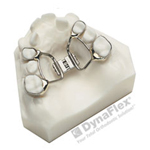
 What is a Palatal Expander?
A palatal expander is an orthodontic appliance that widens your upper jaw by applying gentle pressure to your upper teeth when it's activated.
Who Needs a Palatal Expander?
People with the conditions below may benefit from a palatal expander. Dr. Jones will examine you to see if it's the right fit.
* Crowding
* Crossbite (top teeth inside the bottom teeth)
* Lower jaw shifting to one side to close the teeth together
* Underbite
* History of thumb sucking or a finger habit
* Mouth breathing
* Sleep-disordered breathing or snoring
* Narrow smile
Benefits of Palatal Expansion
Generates space: Expanders make room for crowded teeth and help prevent or relieve impactions (teeth stuck under the gums).
Creates a wider smile: Broad smiles are beautiful!
Corrects crossbites: Left untreated, crossbites can lead to tooth trauma, wear, grinding, gum problems, and TMJ pain. It's amazing how an expander can solve or prevent all of that!
Improves breathing: The expander widens the palate and the nasal airway, so many patients find it easier to breathe through their nose afterward. It also lowers the risk of sleep apnea in children.
Corrects jaw asymmetry: When the upper jaw is narrow, the upper teeth interfere with the lower teeth, and a person subconsciously shifts their lower jaw to one side. Left untreated, that shift can become a permanent asymmetry. The expander widens the upper jaw and removes the interference, so the lower jaw can develop normally.
Wearing a Palatal Expander
To activate it, you'll use a key to turn the mechanism in the center of the appliance.
Some tightness or mild discomfort after activating is normal. If you need it, take Advil or Tylenol as directed.
A gap will open between your upper front teeth. That's a good thing, it means the appliance is working, so embrace your space! Once you stop turning it, the gap closes naturally over the next few weeks.
Keep the appliance clean with good brushing. Patients find water flossers really helpful!
Once expansion is complete, your expander stays in place for at least 6 months for stability.
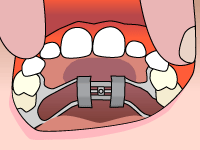
Step 1
In a well-lit area, tip the patient's head back.
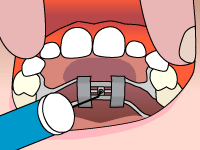
Step 2
Place the key in the hole until it's firmly seated.
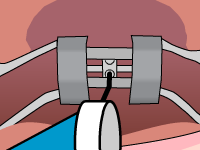
Step 3
Push the key toward the back of the mouth. The fender rotates and a new hole appears. The rotation stops when the key meets the back of the expander.
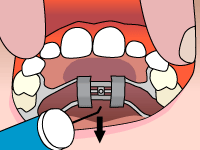
Step 4
Press back and down toward the tongue to remove the key. The next hole for the key should now be visible.